Academic Integrity (UK, Ireland, Australia & Aotearoa New Zealand)

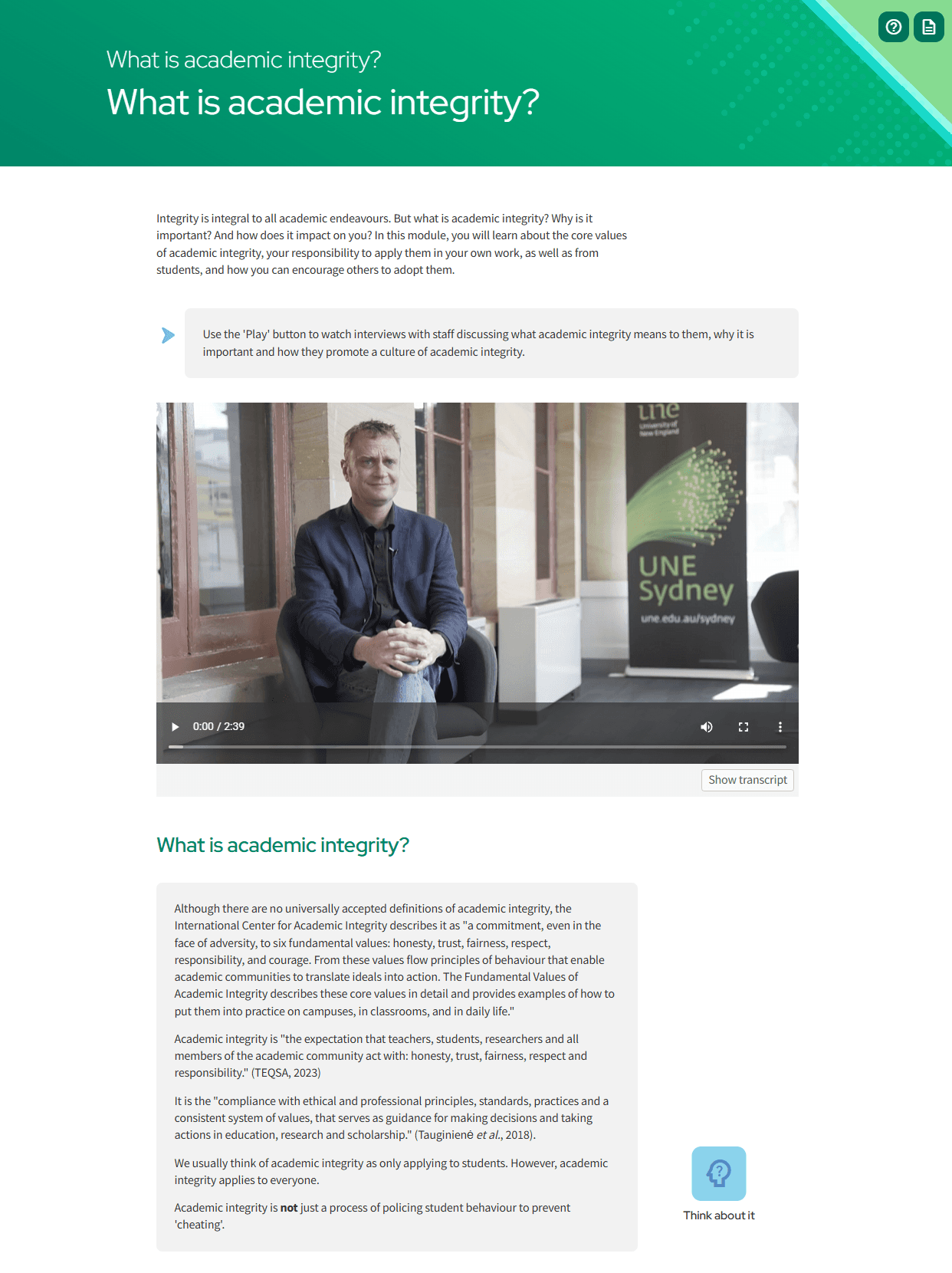
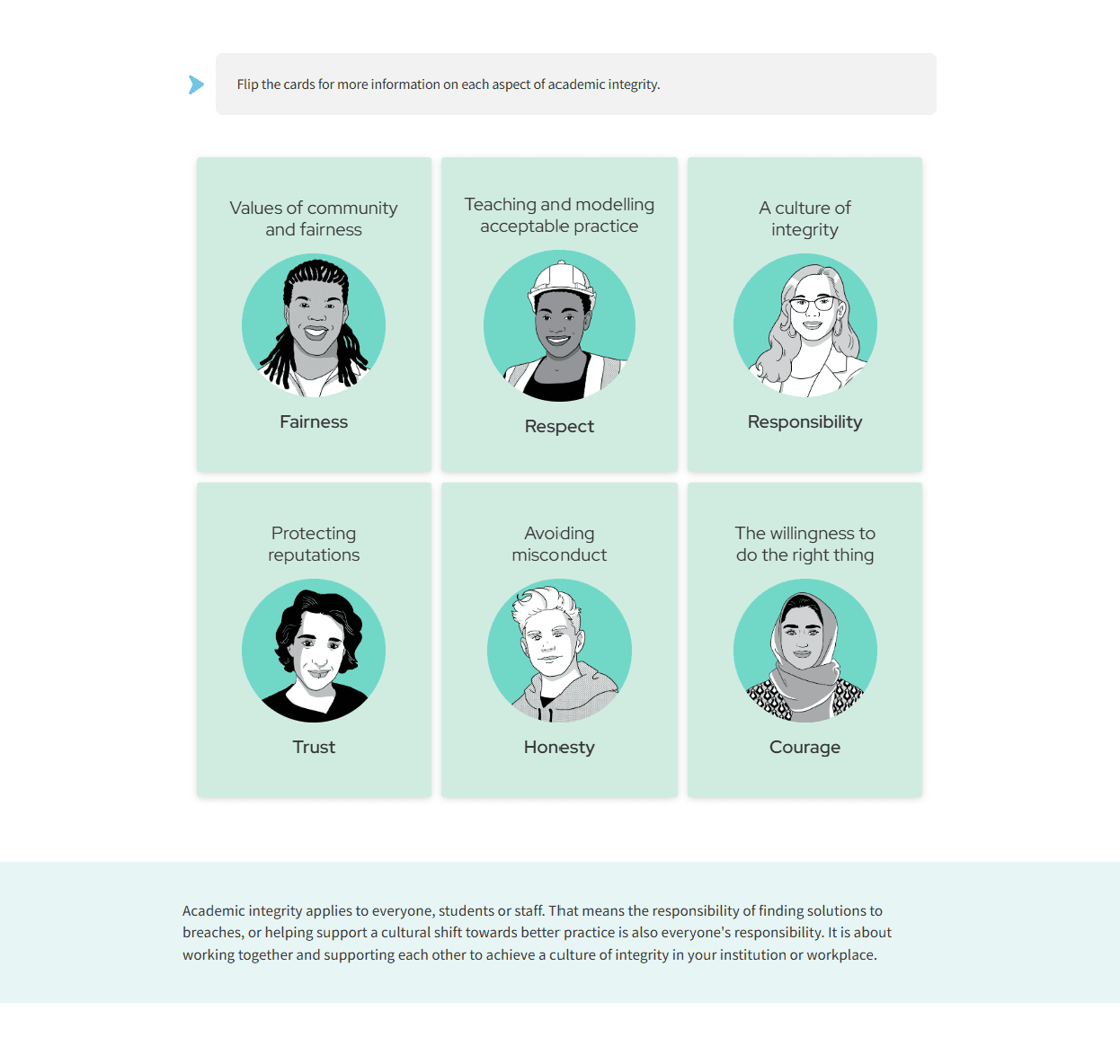
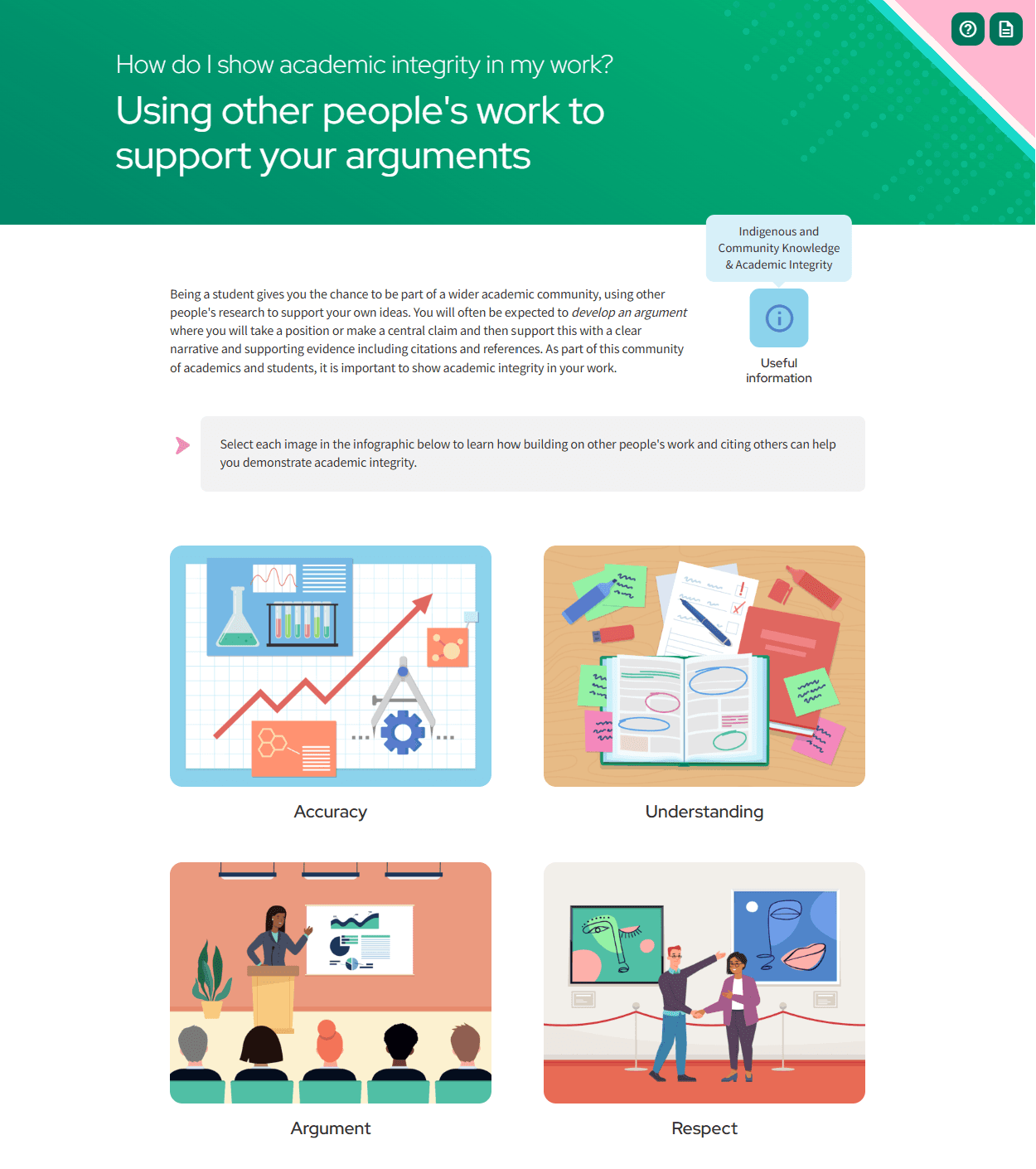
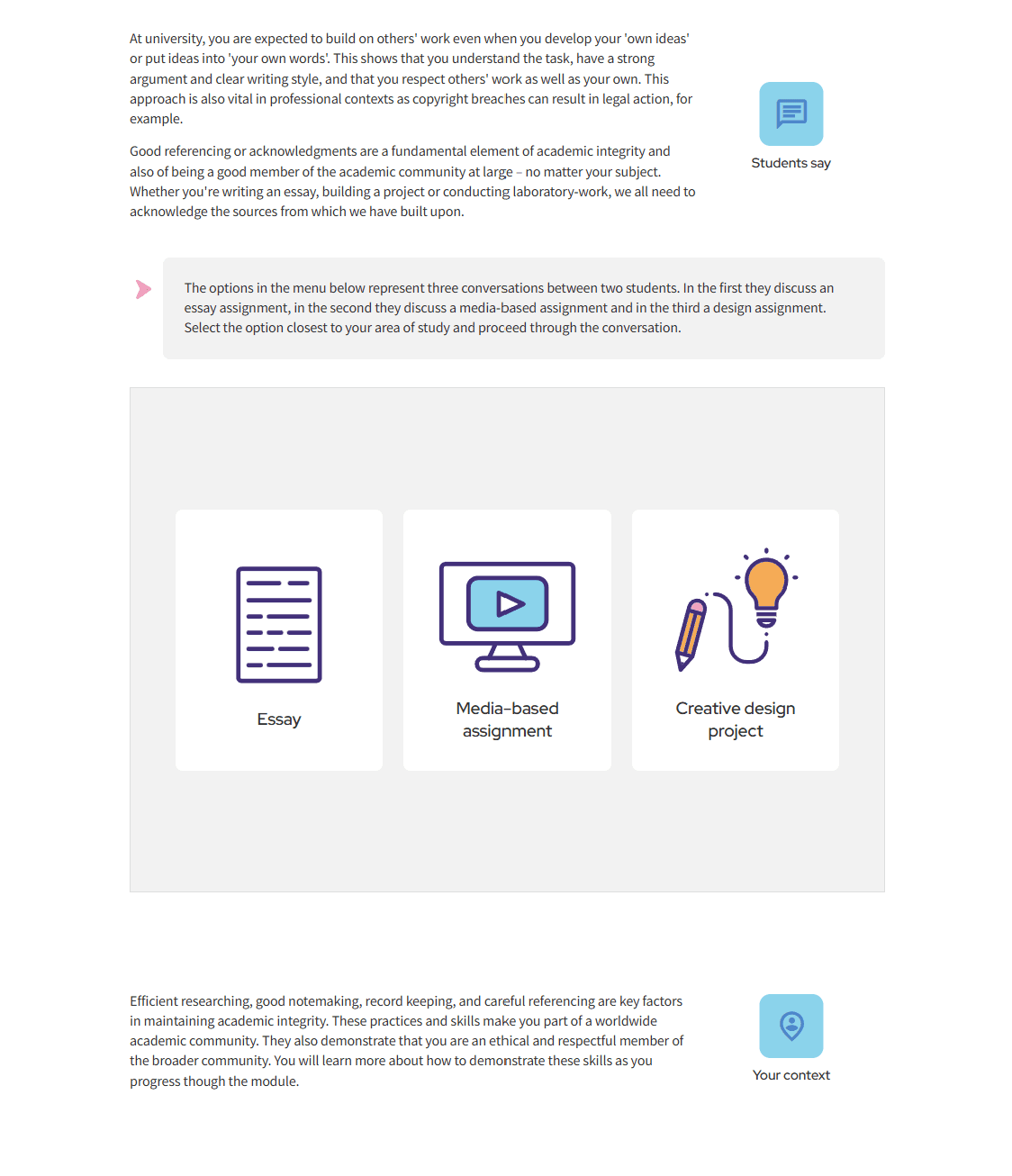
Academic Integrity (UK, Ireland, Australia & Aotearoa New Zealand) is a a set of two online training courses (for staff and students) designed to support learners in understanding academic integrity in higher education. The course explores principles such as honesty, collaboration, and ethical scholarship and attribution, while addressing emerging challenges around digital tools and artificial intelligence.

Academic Integrity (UK, Ireland, Australia & Aotearoa New Zealand) is a a set of two online training courses (for staff and students) designed to support learners in understanding academic integrity in higher education. The course explores principles such as honesty, collaboration, and ethical scholarship and attribution, while addressing emerging challenges around digital tools and artificial intelligence.

Academic Integrity (UK, Ireland, Australia & Aotearoa New Zealand) is a a set of two online training courses (for staff and students) designed to support learners in understanding academic integrity in higher education. The course explores principles such as honesty, collaboration, and ethical scholarship and attribution, while addressing emerging challenges around digital tools and artificial intelligence.

About the project

The programme has localised content for the UK, Ireland, Australia, and Aotearoa New Zealand across two courses, one specifically designed each for staff and students. The course reflects differing global institutional educational cultures and regulatory contexts while maintaining a coherent learning experience. The 2024 update added a new focus on the meaningful integration of artificial intelligence, including its ethical use, limitations, and implications for assessment and learning. Additionally, work was done to ensure that the course held a non-judgmental tone where staff and students were both encouraged to view instances of plagiarism and mis-attribution as points for learning and confidence building.

The programme has localised content for the UK, Ireland, Australia, and Aotearoa New Zealand across two courses, one specifically designed each for staff and students. The course reflects differing global institutional educational cultures and regulatory contexts while maintaining a coherent learning experience. The 2024 update added a new focus on the meaningful integration of artificial intelligence, including its ethical use, limitations, and implications for assessment and learning. Additionally, work was done to ensure that the course held a non-judgmental tone where staff and students were both encouraged to view instances of plagiarism and mis-attribution as points for learning and confidence building.

The programme has localised content for the UK, Ireland, Australia, and Aotearoa New Zealand across two courses, one specifically designed each for staff and students. The course reflects differing global institutional educational cultures and regulatory contexts while maintaining a coherent learning experience. The 2024 update added a new focus on the meaningful integration of artificial intelligence, including its ethical use, limitations, and implications for assessment and learning. Additionally, work was done to ensure that the course held a non-judgmental tone where staff and students were both encouraged to view instances of plagiarism and mis-attribution as points for learning and confidence building.

Date:

15 Jan 2024

Client:

Epigeum, SAGE Publications

Project Details

This project involved reviewing and substantially updating the existing Academic Integrity course as part of Epigeum’s Becoming a Researcher programme. A key challenge was ensuring that the course worked effectively across four distinct higher education contexts, requiring careful consideration of language, examples, expectations, and learner experience.

Multimedia elements required particular attention. Existing videos, images, and scenarios were evaluated for relevance and appropriateness across all four global contexts, with many materials adapted or replaced. Scenarios were developed in multiple versions to reflect different socio-economic, cultural, and institutional contexts, ensuring learners could recognise their own experiences within the course.

Another major area of development was the inclusion of artificial intelligence. The course was updated to address AI tools explicitly, exploring academic integrity in relation to AI-assisted writing, research, and assessment, alongside the ethical considerations and uncertainties institutions and learners are currently navigating.

The project involved close collaboration with authors and subject experts based in different countries, requiring regular coordination across time zones and careful alignment between pedagogical intent, subject expertise, and practical delivery.

My contribution

As the learning designer, I was responsible for:

  • Pedagogical design and course structure
    Shaping the overall learning approach to ensure clarity, consistency, and relevance across UK, Irish, Australian, and Aotearoa New Zealand contexts.

  • Localised content adaptation
    Reviewing existing materials and developing new scenarios and examples that reflected differing cultural, socio-economic, and institutional realities, while maintaining a unified course narrative.

  • Artificial intelligence integration
    Leading the inclusion of AI-related content, ensuring ethical considerations, practical guidance, and uncertainty were handled thoughtfully and accurately.

  • Multimedia development
    Planning, commissioning, and recording new video content with subject experts, and evaluating visual assets to ensure inclusive and appropriate representation.

  • Collaboration and coordination
    Working closely with authors, editors, and contributors across multiple time zones, maintaining strong working relationships and keeping development aligned with project timelines.

  • Editorial oversight
    Reviewing and refining course content to ensure clarity, accessibility, and consistency of tone, particularly in complex or sensitive areas.